XTXP: the protocol
The specification every node obeys. The Math defines how concurrent edits merge. The Wire defines how they travel.
Read the spec →XTXP: the protocol
The specification every node obeys. The Math defines how concurrent edits merge. The Wire defines how they travel.
Read the spec →Xmesh: the engine
The CRDT engine that resolves concurrent edits on an XML tree. A thin, pure layer on the XML types of Yrs, the Rust port of Yjs: a stable, open foundation to build on. No I/O, no clocks, no threads: everything else is an adapter around it.
Read about Xmesh →muppet: the executor
Multi User Progressive Patch Execution Tree. Client-side Xmesh, embedded in Inkscape, in the browser via Wasm, or on a server for no-JS users. It owns every view: the canvas, spatial chat and comments, onion skin and redline. Any muppet can host sessions: admitting edits against their grants, routing them and storing them. On a server it runs headless.
Read about the muppet →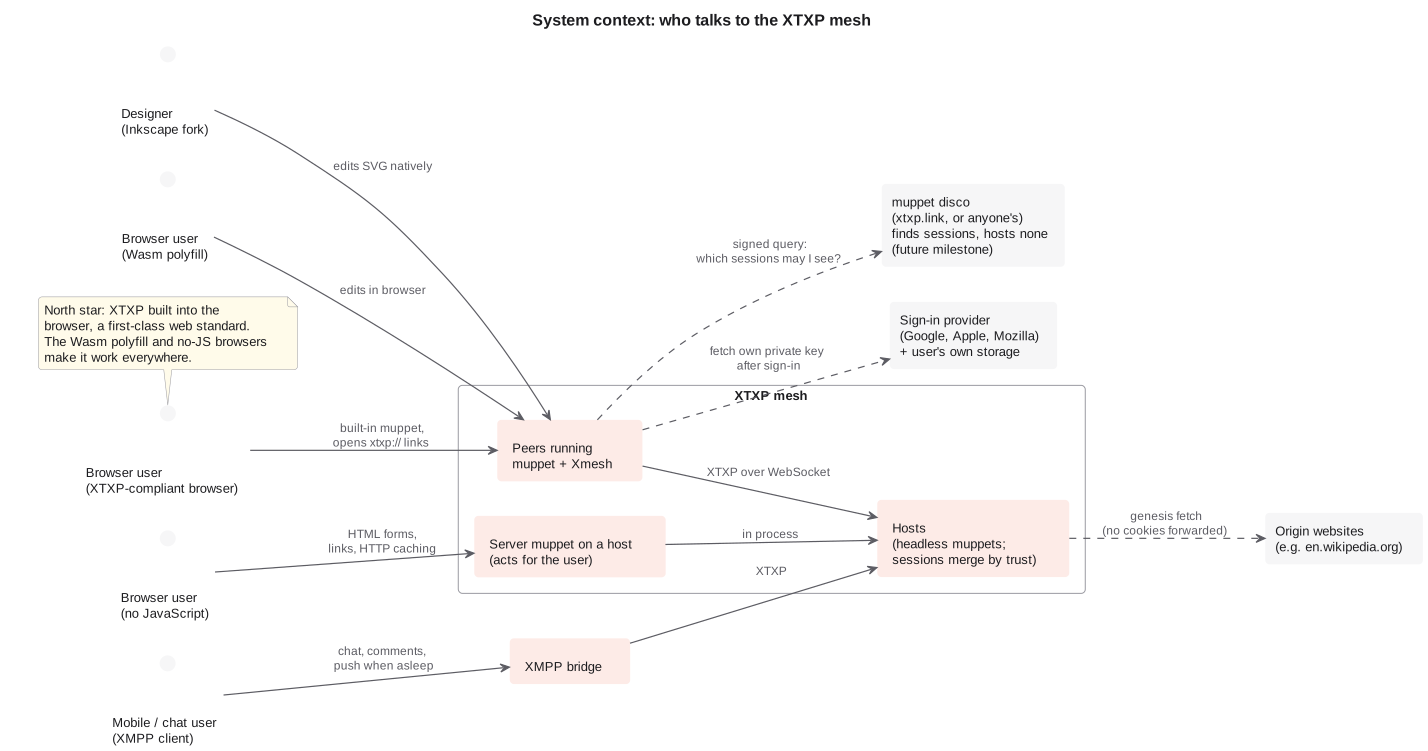
Everything is developed in the open, under the xtxp-link organisation on GitHub. See Repositories for what lives where, and the open questions for what’s up for argument.