Architecture
The parts
Section titled “The parts”| Part | Role | Status |
|---|---|---|
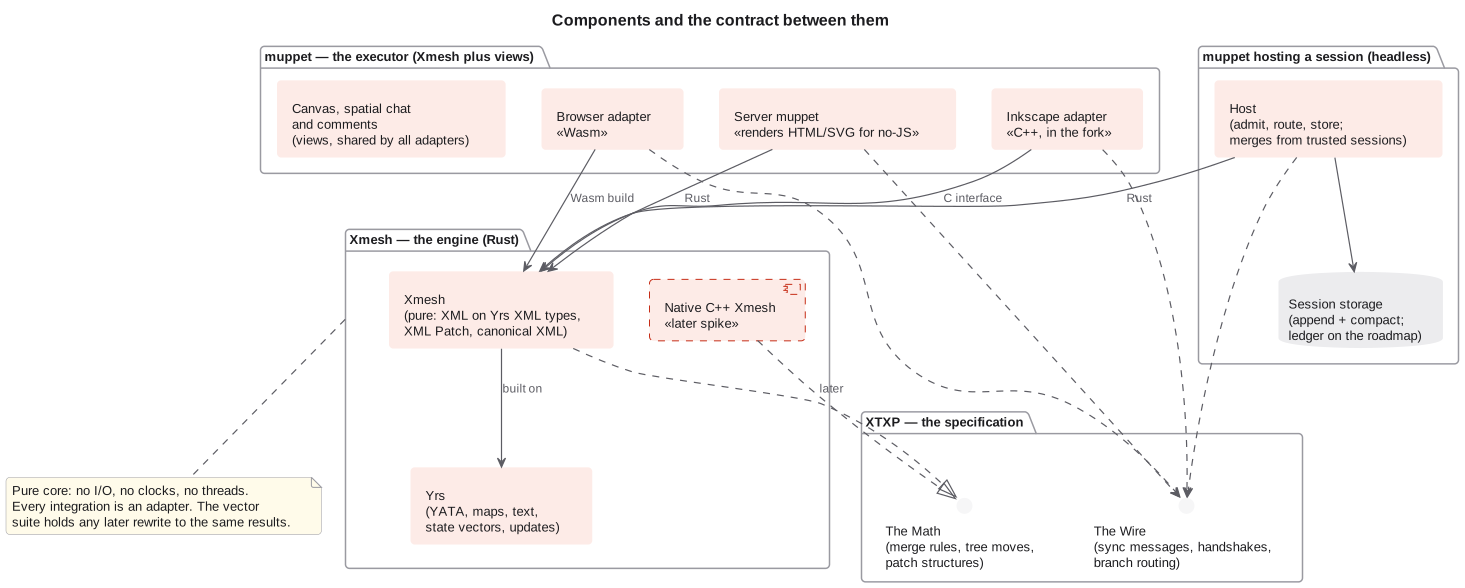
| XTXP | The specification. The Math: CRDT rules, clocks, patch structures, moves. The Wire: sync messages, handshakes, session routing. The language-agnostic contract every node obeys. | draft |
| Xmesh | The engine. Resolves concurrent edits. A thin, pure Rust layer on Yrs’s own XML types that adds full XML node-kind mapping, XML Patch translation and canonical output. A native C++ rewrite is a possible later spike. | decided |
| muppet | Multi User Progressive Patch Execution Tree: client-side Xmesh, and the application layer. Turns local edits into outbound XTXP payloads, applies incoming patches to the local XML tree, and owns every view: the vector canvas, spatial chat and comments, paused queues, onion skin and session previews. Views never change the state of the session being viewed. A muppet can also run headless and host sessions: admitting edits against their grants, routing them and storing them. | decided |
A pure, hexagonal core
Section titled “A pure, hexagonal core”Xmesh is the hexagon’s centre: pure state transformations, with no networking, no file access, no clocks and no threads. It is a Rust crate built on Yrs, and every integration is an adapter around it:
- Inkscape: linked into the fork through a C interface, the way
yffiexposes Yrs to C - Browser: compiled to Wasm
- Server muppet: used natively from Rust
- Hosting muppets: used directly, in Rust
- Tests: driven directly by the vector harness
Keeping the core pure is what lets one Rust codebase serve every one of these. See decision 13.
The split that matters
Section titled “The split that matters”There is no central authority. “Canonical state” means the state every peer converges to, not a state a server announces.
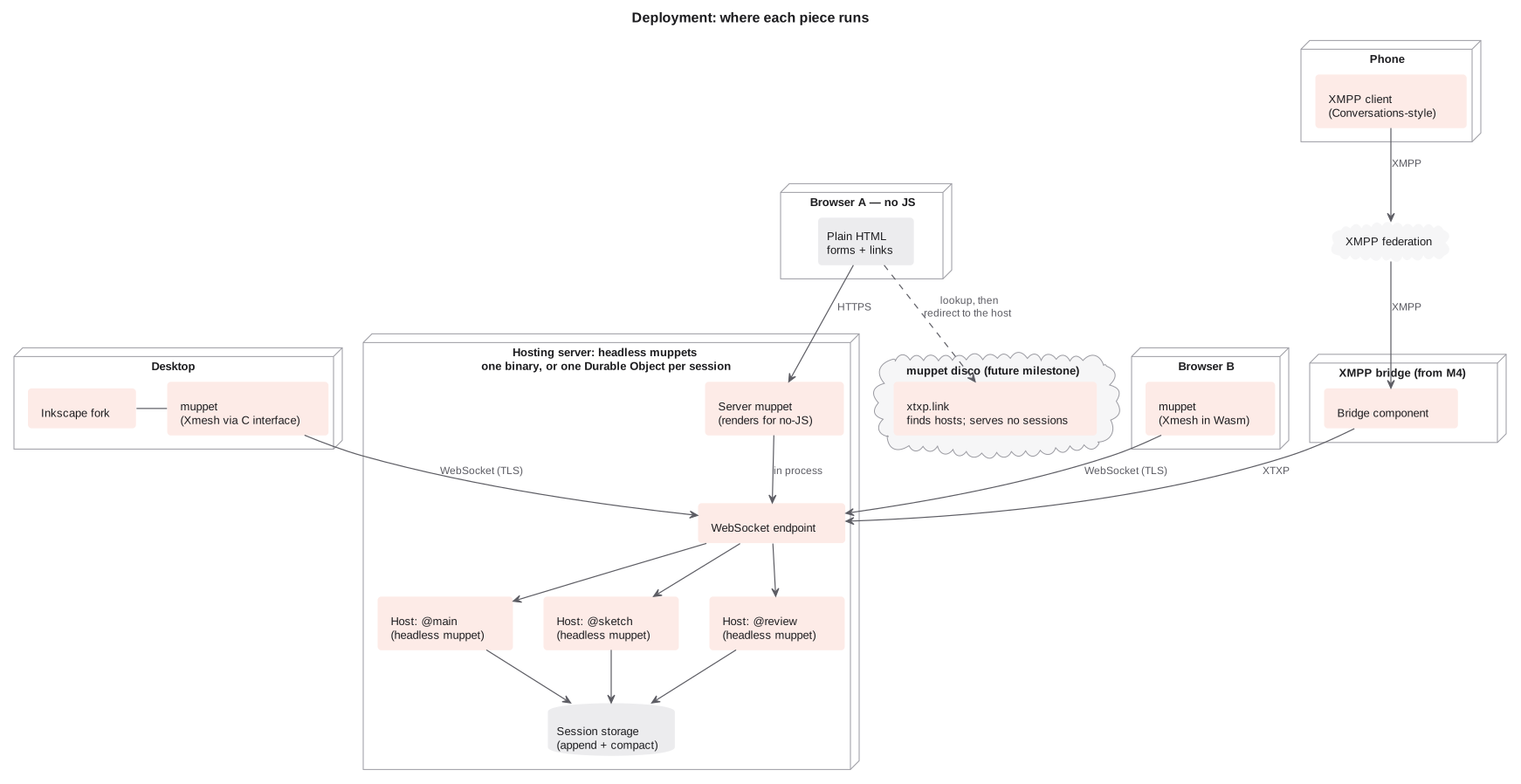
- Muppets execute and render. Every client runs Xmesh, so desktop clients work offline and merge on reconnect. A muppet can run in the Inkscape fork, in the browser (Wasm), on a server for a browser with no JavaScript, or headless as a host.
- Any muppet can host a session. A host holds the session like any muppet and adds admission, routing and storage; on a server it runs headless, with no views and no user of its own. Each session lives on one host, and sessions on different hosts keep each other up to date through trust. New clients load its full state as one compact update instead of replaying history. A dedicated ledger and keyframes are on the roadmap.
- XTXP is node to node. It connects any muppet to any other, hosts included. It is not a client–server API.
Because rendering is just a muppet running somewhere, the no-JS view and the Inkscape view come from the same code and can’t drift apart.
Transport
Section titled “Transport”XTXP is a small sync protocol that doesn’t care about transport. Its main binding is WebSocket, for raw speed, which hosts serve directly. Browsers without JavaScript use HTTP through a server-side muppet. Mobile and chat clients reach a host through an XMPP bridge, which keeps push and store-and-forward for phones. Reconnecting is a state-vector exchange built into XTXP. See The Wire.
Identity is a public key, and access is granted by key. See Identity and access.